
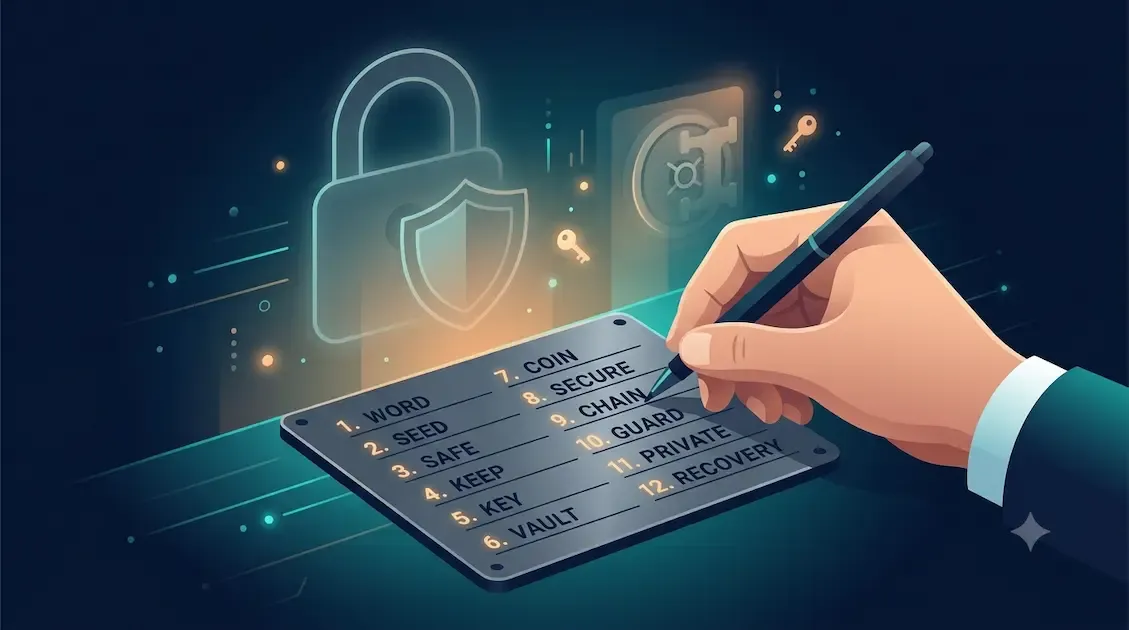
What happens if you lose your seed phrase? Learn the harsh truth, how recovery phrases work, and whether recovery without one is possible.
Twelve or twenty-four random words. That’s it. That’s the difference between having full access to your crypto and losing it permanently. If you’ve misplaced yours, or you’re simply trying to understand what happens if you lose your seed phrase before it becomes a real problem, you’re asking exactly the right question at exactly the right time.
This isn’t a scare tactic — it’s just how self-custody crypto wallets are designed to work. In this guide, you’ll learn what a seed phrase actually is, what genuinely happens when it’s lost, the real difference between a seed phrase vs private key, and whether recovering crypto without a seed phrase is ever possible. This article is purely educational — we don’t offer recovery services, wallet products, or trading, so there’s no sales angle here, just a clear, honest explanation.
What Is a Seed Phrase, and Why Does It Matter So Much?
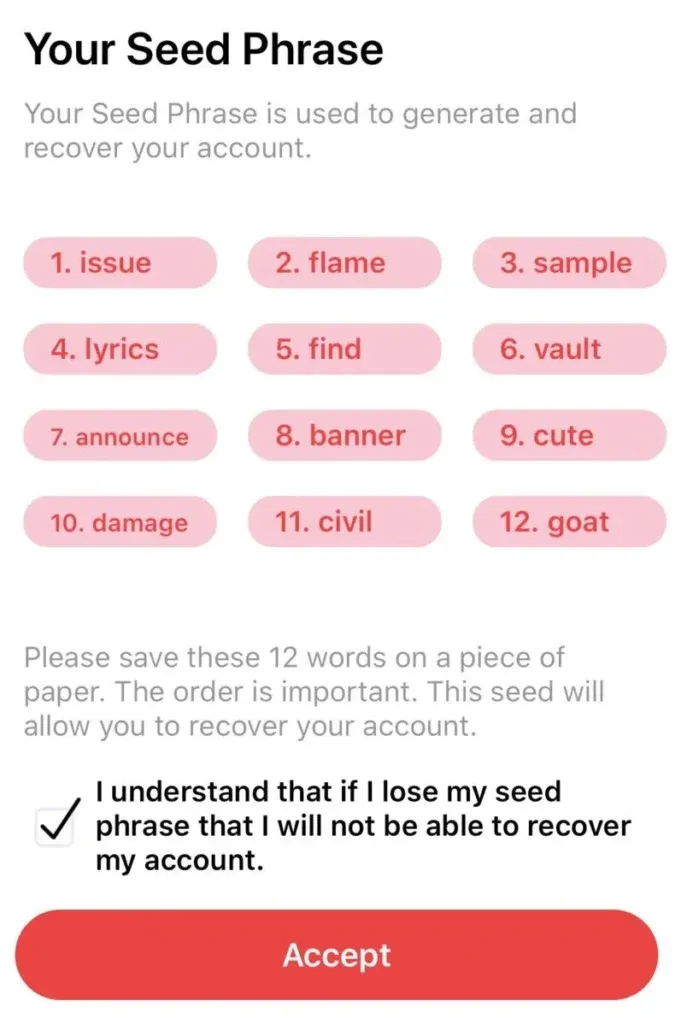
A seed phrase (also called a recovery phrase or mnemonic phrase) is a sequence of 12 to 24 words generated when you first set up a crypto wallet. This crypto wallet recovery phrase explained simply is a human-readable backup of the complex cryptographic key that actually controls your funds.
Instead of remembering a long string of random numbers and letters, your wallet software converts that key into ordinary words, making it easier for a person to write down, store, and — critically — restore later if something goes wrong with the device or app the wallet lives on.
The seed phrase isn’t just a way into your wallet. On most non-custodial wallets, it’s the way in. There’s no “forgot password” button, no customer support line that can reset it, and no company holding a backup on your behalf. This is the core tradeoff of self-custody: total control, but also total responsibility.
What Happens If You Lose Your Seed Phrase? The Direct Answer
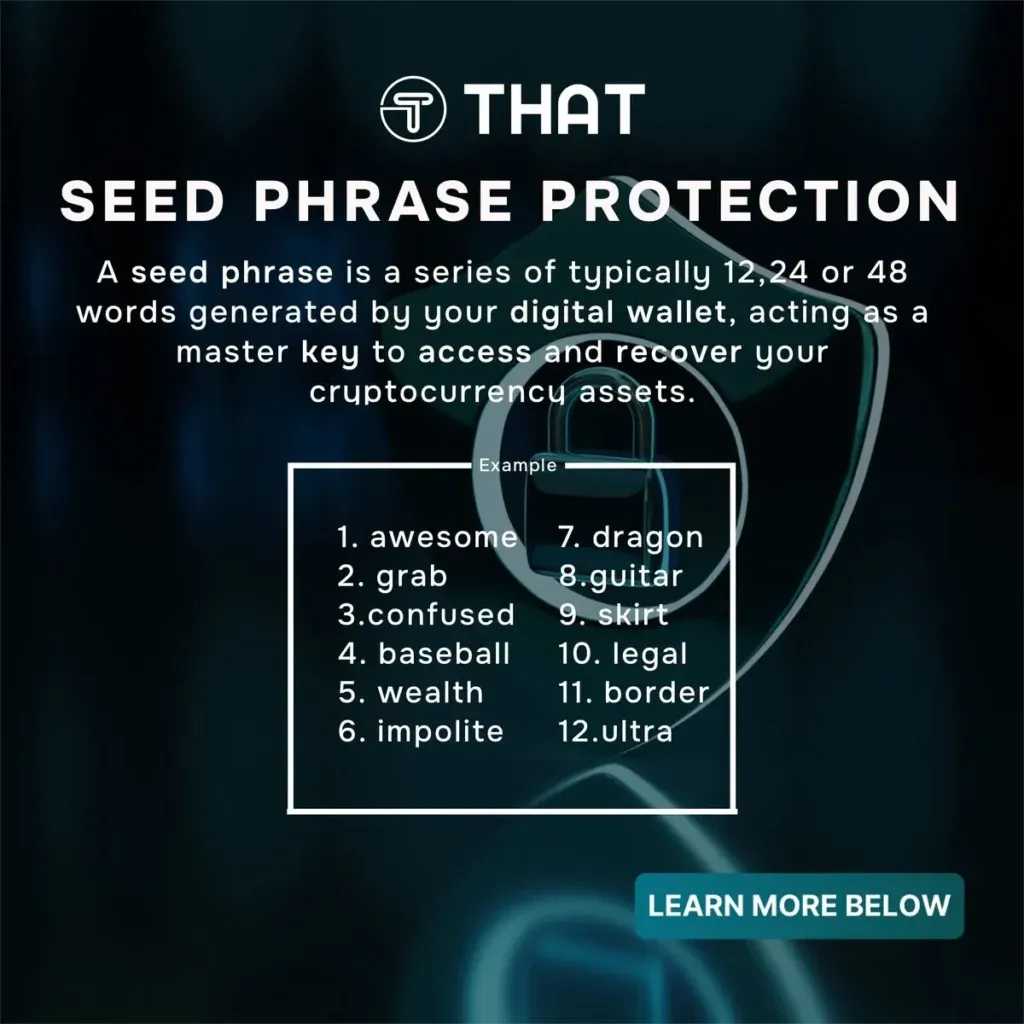
Here’s the direct, no-sugar-coating answer: if you lose your seed phrase and you lose access to your wallet itself (the device, app, or browser extension it’s stored in), your funds become permanently inaccessible. Not “difficult to access” — permanently locked, with no technical backdoor.
This sounds alarming, and it is a serious risk worth taking seriously, but it’s important to separate two very different scenarios:
- Scenario A: You lose the seed phrase, but your wallet app or device still works and is still logged in. Your funds are fine. You can (and should) generate and securely store a new backup immediately, since your existing wallet session is still functional.
- Scenario B: You lose the seed phrase AND lose access to the wallet itself (device is broken, lost, wiped, or the app is uninstalled without an existing backup). This is the scenario where funds become genuinely unrecoverable.
Understanding which scenario you’re actually in is the first step — plenty of people panic assuming Scenario B when they’re really in Scenario A.
Seed Phrase vs Private Key: What’s the Real Difference?
These two terms get used almost interchangeably, but there’s a meaningful seed phrase vs private key distinction worth understanding.
- A private key is the actual cryptographic key, usually a long string of letters and numbers, that mathematically proves ownership of a wallet address and authorizes transactions.
- A seed phrase and recovery phrase is a human-friendly representation that can generate not just one private key, but potentially many private keys and wallet addresses, all derived from that single set of words using a standardized process (most commonly the BIP-39 standard).
In practical terms: your seed phrase is the master backup, and your private keys are what it generates underneath the hood. Losing a single private key on a wallet that has many addresses might only affect one address; losing the seed phrase can affect everything derived from it.
This is why most wallet providers strongly emphasize backing up the seed phrase specifically, rather than individual private keys — it’s the more complete, more critical backup of the two.
Can You Recover Crypto Without a Seed Phrase?
This is one of the most emotionally charged questions in all of crypto, so let’s be direct: in the vast majority of cases, no — you cannot recover crypto without a seed phrase and recovery phrase if you’ve also lost access to the original wallet. However, there are a few narrow exceptions and adjacent situations worth knowing about.
When Recovery Might Still Be Possible
- Your wallet is still logged in somewhere. If you have an active session on a phone, browser extension, or hardware device, you haven’t actually lost access yet — you can still export or regenerate a new seed phrase before anything is lost.
- You used a custodial exchange, not a self-custody wallet. If your crypto sits on an exchange (where the platform holds the keys on your behalf), account recovery typically goes through identity verification and customer support, not a seed phrase at all. This is a fundamentally different system from self-custody wallets.
- You have a partial backup or a memory aid. Some people write down a seed phrase with slight errors or split it across multiple locations. In rare cases, wallet recovery tools can help reconstruct a phrase if you remember most but not all of it — though this is far from guaranteed and can take significant time.
- Multi-signature or social recovery wallets. Some newer wallet designs are specifically built to avoid single-point-of-failure seed phrases, using multiple approvers or backup guardians instead of recovery phrase. If you set one of these up in advance, losing one factor doesn’t necessarily mean losing your funds.
When Recovery Is Not Possible
If none of the above apply — meaning you’ve lost the seed phrase, have no active wallet session, and didn’t set up any alternative recovery method in advance — there is currently no legitimate technical method to recover the funds. Be extremely cautious of anyone online claiming they can “recover” a lost seed phrase or wallet for a fee; this is a common and well-documented scam targeting people in exactly this stressful situation.
Real Reasons People Lose Their Seed Phrase
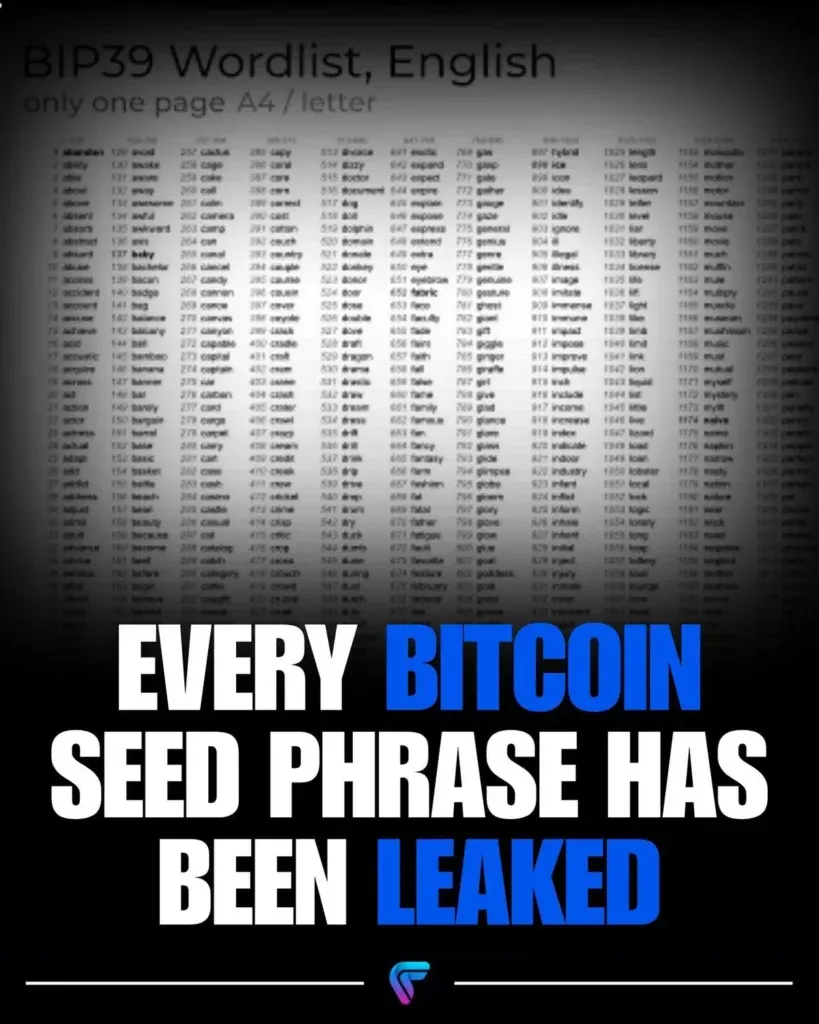
Understanding the common causes can help you avoid becoming a statistic yourself:
- Physical loss: A paper backup thrown away, damaged in a fire or flood, or simply misplaced during a move.
- Digital storage mistakes: Storing a seed phrase as a photo, screenshot, or text file on a device that’s later lost, stolen, or wiped — this also introduces hacking risk, since digital copies can potentially be found by malware.
- No backup made at all: Rushing through wallet setup and skipping the backup step, assuming it can be done “later.”
- Death or incapacitation without a plan: A backup existing, but no one else knowing where it is or how to use it, meaning the funds become inaccessible to anyone, including family.
- Overwriting or losing digital password managers: For people who stored their phrase in an encrypted note or password manager, losing access to that master account can cascade into losing the seed phrase too.
How to Properly Back Up a Seed Phrase (Before You Need To)
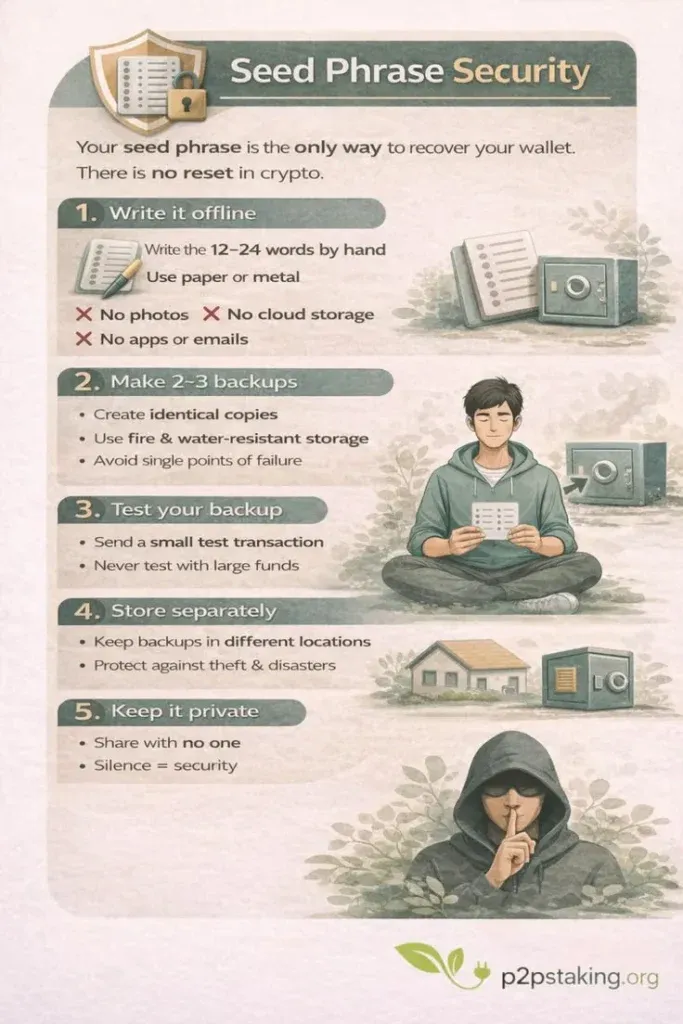
If you’re setting up a new wallet, or realizing your current backup approach is risky of recovery phrase, here’s what’s generally recommended:
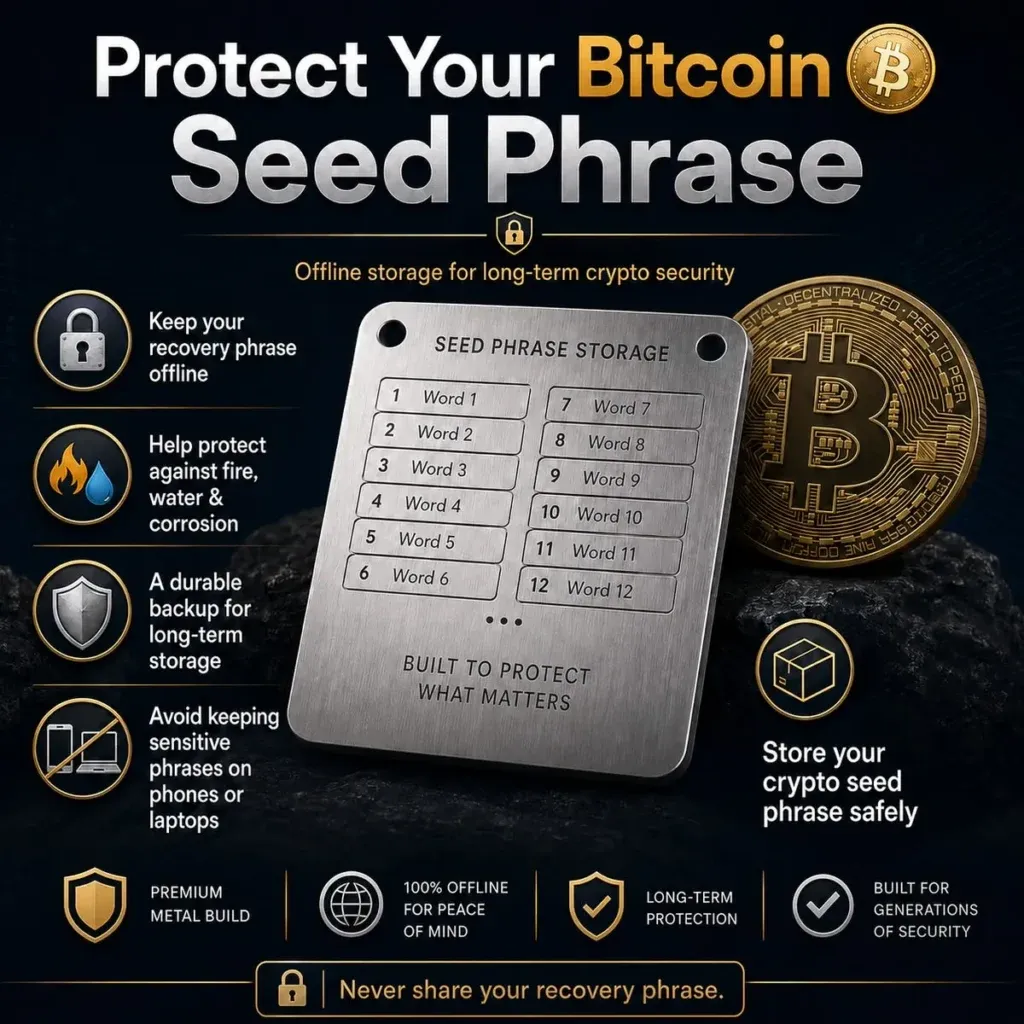
- Write it down physically — pen and paper, or a fireproof/waterproof metal backup plate designed specifically for seed phrases, rather than relying purely on digital storage.
- Never store it as a plain digital file, photo, or cloud note — these are far more vulnerable to hacking than a physical copy is to theft, in most realistic threat models for everyday users.
- Store copies in more than one secure physical location — protecting against fire, flood, or a single point of failure, while still limiting how many people or places have access.
- Never share it with anyone, including “support” agents — legitimate wallet providers and exchanges will never ask for your seed phrase; this request is one of the most reliable signs of a scam.
- Consider a plan for loved ones — some form of secure, documented instruction for a trusted person in case of emergency, without leaving the phrase itself openly accessible day-to-day.
Common Myths About recovery phrase
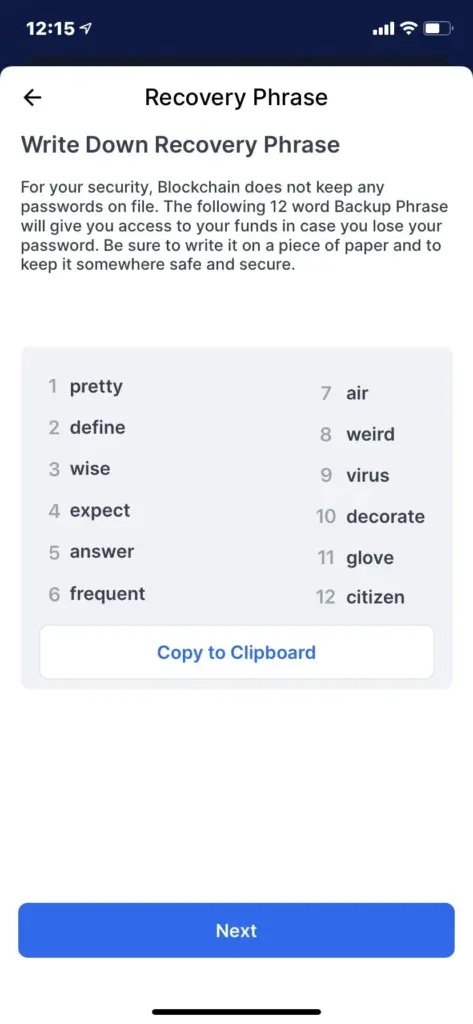
Because losing access to funds is such an emotionally intense situation, misinformation spreads quickly. A few myths worth debunking directly:
Myth: “Blockchain companies have a master key that can unlock any wallet.” This isn’t how self-custody wallets work. No legitimate wallet provider, blockchain foundation, or exchange holds a universal backdoor key to non-custodial wallets. If they did, it would defeat the entire security model that makes self-custody crypto valuable in the first place.
Myth: “If I know my wallet address, someone can help me get in without the seed phrase.” A wallet address is public information by design — anyone can see it, and it reveals nothing that helps recover access. Access is controlled entirely by the private keys derived from your seed phrase, not by the address itself.
Myth: “Paying a ‘recovery specialist’ upfront guarantees my funds back.” This is one of the most common scams targeting people who’ve lost seed phrases. Scammers specifically search for public posts (in forums, Reddit, social media) from people describing this exact situation, then offer fake recovery services that request an upfront fee or, worse, request the very details needed to steal any remaining access. Genuine recovery, in the narrow cases where it’s even technically possible, does not typically start with an upfront guarantee.
Myth: “A quantum computer or advanced hacking tool will eventually crack any wallet.” While cryptography is a constantly evolving field, current-generation wallets rely on well-tested cryptographic standards that are not practically breakable with today’s technology. This myth is often used to justify scam “recovery” services claiming access to advanced tools that don’t actually exist for this purpose.
Should You Consider Estate Planning for Your Seed Phrase?
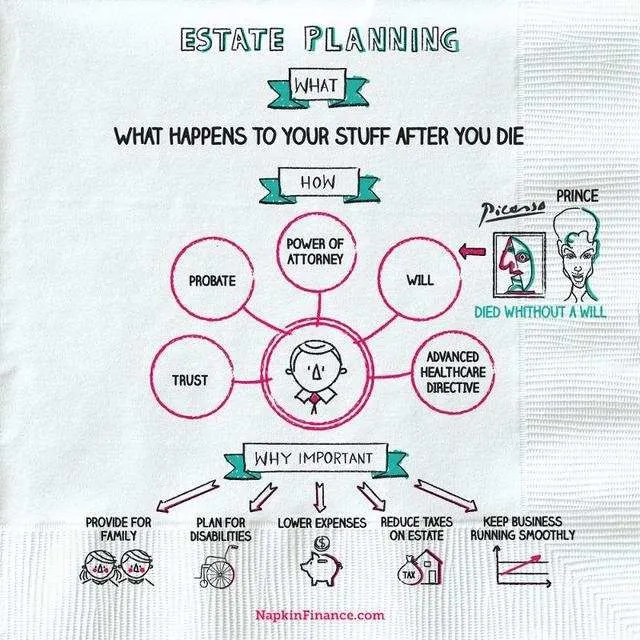
This is a topic that doesn’t get discussed enough in crypto education, but it matters. Because there’s no company holding a backup, no customer support line, and no automatic account transfer, crypto assets can become permanently inaccessible not just through personal loss, but through death or incapacitation, if no one else knows how to access them.
A few starting points worth researching further (ideally with a legal or estate professional, since specifics vary by jurisdiction):
- Documented but secured instructions: Some form of written guidance for a trusted person, stored securely and separately from the seed phrase itself, so it isn’t a single point of failure or an easy target if discovered.
- Multi-signature setups for larger holdings: For significant amounts, some people use wallets that require multiple approvers, distributing risk and access rather than relying on one single phrase held by one single person.
- Legal instruments where applicable: Depending on your location, certain trust or estate planning tools may be relevant for larger crypto holdings, similar to how other valuable assets are handled.
This isn’t something every casual crypto user needs to formalize immediately, but it’s worth thinking about proportionally to how much value is at stake and how long you plan to hold it.
One detail beginners rarely consider: even if you successfully restore a wallet using your seed phrase, interacting with that wallet afterward (moving funds to a new, more secure wallet, for example) will still require paying network fees. If you’re unfamiliar with how these costs work, our guide on what a gas fee is and how it’s calculated explains the basics, since it’s a common next question once a wallet is successfully restored.
Similarly, if a restored transaction seems to be taking an unusually long time to process, that’s a separate and generally unrelated issue — our guide on why crypto transactions get stuck in pending status covers that specific situation in detail.
Frequently Asked Questions
1. What happens if you lose your seed phrase but still have your wallet open?
If your wallet app or device is still logged in and functional, your funds are safe. You should generate a new backup immediately, since your current access could be lost at any time without a phrase to restore it.
2. Is there a difference between a seed phrase vs private key I should actually care about?
Yes — a seed phrase can generate multiple private keys and wallet addresses, making it the more complete backup of recovery phrase. Losing a seed phrase and recovery phrase is generally more consequential than losing a single private key tied to one address.
3. Can you recover crypto without a seed phrase if you used an exchange?
Often yes, since custodial exchanges typically hold the keys on your behalf and use identity verification and account recovery processes instead of a personal seed phrase.
4. Are there companies that can legitimately recover a lost seed phrase?
Be very cautious here. Legitimate wallet recovery is only possible in narrow technical circumstances (like partial phrase reconstruction with significant remembered detail). Anyone guaranteeing full recovery for a fee, especially upfront, should be treated as a major red flag for scams.
5. What’s the safest way to store a seed phrase long-term?
Most security-focused sources recommend a physical, non-digital backup (paper or a fireproof metal plate) stored in more than one secure location, rather than any digital photo, file, or cloud storage.
Final Thoughts
Understanding what happens if you lose your seed phrase isn’t meant to scare you away from self-custody crypto — it’s meant to help you take backup seriously before it becomes urgent. The seed phrase vs private key distinction, the honest limits of recovering crypto without a seed phrase, recovery phrase and a proper backup routine are all things worth setting up on day one, not after something goes wrong.
Want to keep strengthening your crypto security knowledge?
Check out our related guides on wallet types explained, what a gas fee is, and why transactions get stuck pending to build a fuller picture of how crypto wallets actually work.
This article is for educational purposes only and does not constitute financial, investment, legal, or security advice.


555