
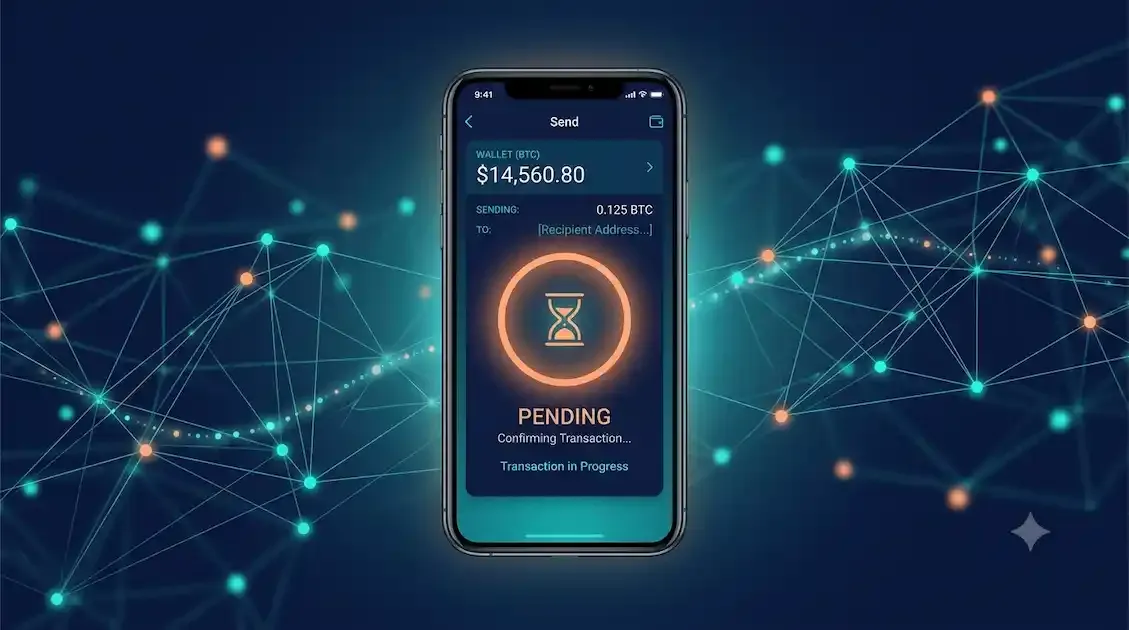
Wondering why is my crypto transaction pending? Learn the real reasons transactions get stuck, how long they take, and what to do next.
You sent your crypto. The app shows a spinning wheel. Twenty minutes pass. Then an hour. You start Googling “why is my crypto transaction pending” at 1 a.m., convinced something has gone horribly wrong.
Take a breath — this happens to almost everyone who uses crypto regularly, and in most cases, nothing is broken. Your funds usually aren’t lost. What you’re seeing is a normal (if stressful) part of how blockchains process transactions.
In this guide, you’ll learn exactly why a crypto transaction pending status happens, how long you should realistically expect to wait, what separates a slow transaction from a truly stuck one, and what steps actually help. This article is purely educational — we don’t offer trading, buying, or selling services, so there’s no sales pitch here, just a clear explanation.
What Does “Pending” Actually Mean in Crypto?

When your wallet shows a transaction as pending, it means the transaction has left your wallet and entered the network’s “waiting room” — usually called the mempool (short for memory pool) — but hasn’t yet been confirmed by miners or validators.
Think of the mempool like a queue at a busy coffee shop. You’ve placed your order (submitted the transaction), but the barista (a miner or validator) hasn’t gotten to it yet. Until someone picks it up and processes it, it just sits there, visible but not yet completed.
This is different from a transaction that has failed or been rejected. A pending crypto transaction is still alive and waiting; it just needs the network to catch up.
Why Is My Crypto Transaction Pending? The Main Reasons

There isn’t one single answer — a handful of factors, often together, decide whether your transaction confirms in seconds or sits unconfirmed for hours.
1. Network Congestion
Blockchains have limited space per block. When lots of people are transacting at once (during a market rally, an NFT drop, or a popular token launch), transactions compete for a limited number of slots. If demand spikes faster than the network can process, your transaction can end up waiting in line behind thousands of others.
2. Low Transaction Fees
Most blockchains, including Bitcoin and Ethereum, let users set (or auto-set) a transaction fee. Miners and validators are financially incentivized to process transactions with higher fees first. If your fee was set too low relative to current network demand, your transaction can sit unconfirmed while higher-fee transactions get processed ahead of it. This is one of the most common reasons a crypto transaction is stuck.
3. Network-Specific Confirmation Requirements
Different blockchains have different rules for what counts as “confirmed.” Bitcoin, for example, often requires multiple block confirmations (commonly six) before an exchange considers a deposit fully settled, even though the first confirmation might come relatively quickly. This is a major reason people ask how long do crypto transactions take — the answer depends heavily on which blockchain you’re using.
4. Wallet or Node Sync Issues
Occasionally, the pending status isn’t about the blockchain at all — it’s about your wallet app. If your wallet software hasn’t fully synced with the network, it may continue displaying “pending” even after the transaction has actually confirmed on-chain. This is a display problem, not a blockchain problem.
5. Nonce Errors (Mainly on Ethereum and EVM Chains)
On networks like Ethereum, each transaction from your wallet is assigned a sequential number called a nonce. If an earlier transaction from your wallet is still unconfirmed, later transactions can get stuck behind it, even if they individually had a reasonable fee. This is a technical but common cause of an unconfirmed transaction crypto users encounter without realizing why.
How Long Do Crypto Transactions Take? Realistic Timeframes

There’s no single universal answer, since it depends on the blockchain and current network conditions. As general, educational reference points:
- Bitcoin: Roughly 10 minutes per block on average, but full confirmation (multiple blocks) can take 30–60 minutes or longer during congestion.
- Ethereum: Often 15 seconds to a few minutes under normal conditions, but can stretch to 30+ minutes during high demand.
- Faster networks (e.g., some newer Layer 1s and Layer 2s): Often seconds to a couple of minutes, since they’re designed for higher throughput.
If your transaction has been pending well beyond these typical windows, it doesn’t necessarily mean it’s lost — but it’s worth checking the details more closely, which we’ll cover next.
How to Check the Real Status of a Pending Transaction

Instead of guessing, you can verify what’s actually happening using a block explorer — a free, public tool that shows real-time blockchain activity. For example:
- For Bitcoin transactions, a Bitcoin block explorer lets you paste your transaction ID (TXID) and see its exact status.
- For Ethereum and EVM-compatible chains, an explorer like Etherscan shows pending status, gas price paid, and queue position.
Pasting your transaction ID into the relevant explorer tells you definitively whether it’s:
- Still pending in the mempool
- Confirmed but not yet reflected in your wallet app
- Dropped from the mempool entirely (more on this below)
What Happens If a Transaction Stays Stuck Too Long?
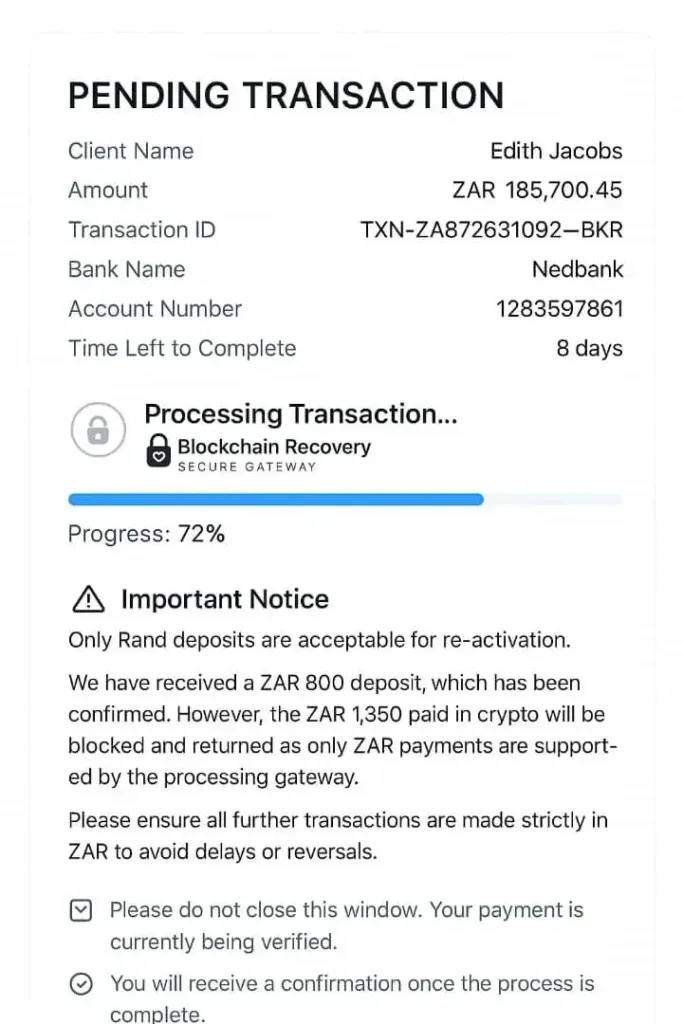
If network fees rise significantly after you submit a low-fee transaction, and it never gets picked up, most blockchains will eventually drop it from the mempool after a period of time (this varies by network, but it’s often anywhere from a few hours to a few days). When that happens, the funds typically return to the sender’s wallet, since the transaction was never actually processed.
This is different from the funds being “lost.” As long as the transaction wasn’t confirmed, no value transfer legally occurred on-chain — it simply expired from the waiting queue.
Some wallets also let users “speed up” or “cancel” a pending transaction by resubmitting it with a higher fee, though availability of this feature depends on the wallet and blockchain involved.
Common Mistakes That Lead to Pending or Stuck Transactions
- Underestimating fees during high-demand periods — copying a fee amount from a calm period and using it during a busy one.
- Submitting multiple transactions in quick succession — especially on Ethereum, where nonce ordering matters.
- Closing the wallet app immediately after sending — this doesn’t cancel the transaction, but it can make it harder to track status changes in real time.
- Panicking and resending the same transaction — this can create duplicate pending transactions and add confusion, particularly on account-based networks like Ethereum.
Frequently Asked Questions
1. Why is my crypto transaction still pending after an hour?
The most common reasons are network congestion or a transaction fee that’s too low relative to current demand. Checking your transaction ID in a block explorer will show its real-time position and status.
2. Can a pending crypto transaction be reversed?
Not exactly “reversed,” but if it hasn’t confirmed yet, some wallets allow you to resubmit it with a higher fee (“speed up”) or attempt a cancellation. Once confirmed, blockchain transactions generally cannot be reversed.
3. Is a pending transaction the same as a failed transaction?
No. Pending means it’s still waiting to be processed. Failed means the network rejected it outright, often due to insufficient fees, invalid data, or smart contract errors. These show differently in most block explorers.
4. How long do crypto transactions take on average?
It varies by network — Bitcoin transactions often take 10–60 minutes for full confirmation, while Ethereum and faster chains can range from seconds to a few minutes under normal conditions.
5. Will I lose my funds if my transaction stays unconfirmed forever?
Generally no. If a transaction is never confirmed and eventually drops from the mempool, the funds typically remain in (or return to) the sender’s wallet, since no transfer was completed on-chain.
Final Thoughts
A crypto transaction pending status is unsettling the first time you see it, but it’s rarely a sign of lost funds. In almost every case, it comes down to network congestion, fee levels, or confirmation requirements specific to that blockchain — all things you can verify yourself using a free block explorer rather than guessing.
Understanding why transactions get stuck also makes you a more confident, informed participant in the crypto space — which is exactly what education-first platforms like this one are here for.
Want to understand more of the “why” behind everyday crypto confusion?
Check out our related guides on what gas fees really are and wallet types explained (internal link placeholders) to keep building your crypto literacy, one concept at a time.
This article is for educational purposes only and does not constitute financial, investment, or trading advice.


2 thoughts on “Why Is My Crypto Transaction Pending? Don’t Panic — Here’s Why 2026”